French and Indian War
1754 - 1763
Bryant LESTER: The French and Indian War was fought between 1754 and 1763. It was the North American theater of the global Seven Years’ War, involving Britain, France, and their respective Native American allies, and concluded with a British victory and the Treaty of Paris.
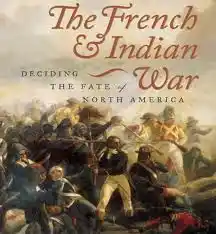
The French and Indian War (1754‑1763) was the North American theater of the global Seven Years’ War, a clash of empires that reshaped the continent’s political map. Though the name emphasizes the involvement of Native American tribes allied with France, the conflict was fundamentally a struggle between two European powers—Britain and France—each seeking to dominate the lucrative fur trade, fertile lands, and strategic ports along the Ohio River Valley and the Great Lakes. The war began in the contested frontier of western Pennsylvania when a young Virginian officer, George Washington, led a militia expedition against a French fort at Jumonville Glen, sparking a series of raids, sieges, and pitched battles that would draw in colonists, professional soldiers, and a myriad of Indigenous nations.
French strategy relied on a network of fortified outposts (such as Fort Duquesne and Fort Niagara) and the support of tribes like the Ottawa, Lenape, and Cherokee, who leveraged their intimate knowledge of the terrain to conduct guerrilla raids and ambushes. The British, meanwhile, supplemented regular army units with provincial militias and hired Indian allies, most notably the Iroquois Confederacy, whose diplomatic flexibility allowed them to switch sides as the balance of power shifted. Key engagements—Braddock’s disastrous defeat in 1755, the British capture of Fort Duquesne (renamed Pittsburgh) in 1758, and the decisive Battle of Quebec in 1759—demonstrated how the war evolved from frontier skirmishes into large‑scale operations involving thousands of troops, naval blockades, and coordinated campaigns across Canada, the Caribbean, and Europe.
The war’s conclusion came with the Treaty of Paris (1763), which extinguished French colonial presence east of the Mississippi River, ceding Canada and all French claims in the Ohio Valley to Britain, while Spain received Louisiana west of the Mississippi as compensation for its loss of Florida. The British victory, however, came at a steep fiscal cost; the Crown’s attempts to recoup war debts through taxes and trade restrictions ignited colonial resentment, sowing the seeds of the American Revolution. For many Indigenous peoples, the war’s outcome proved catastrophic: the removal of the French—who had generally pursued more cooperative trade relations—left Native nations exposed to expanding British settlement and aggressive land policies, ushering in a period of dispossession that would shape the continent’s future for generations.